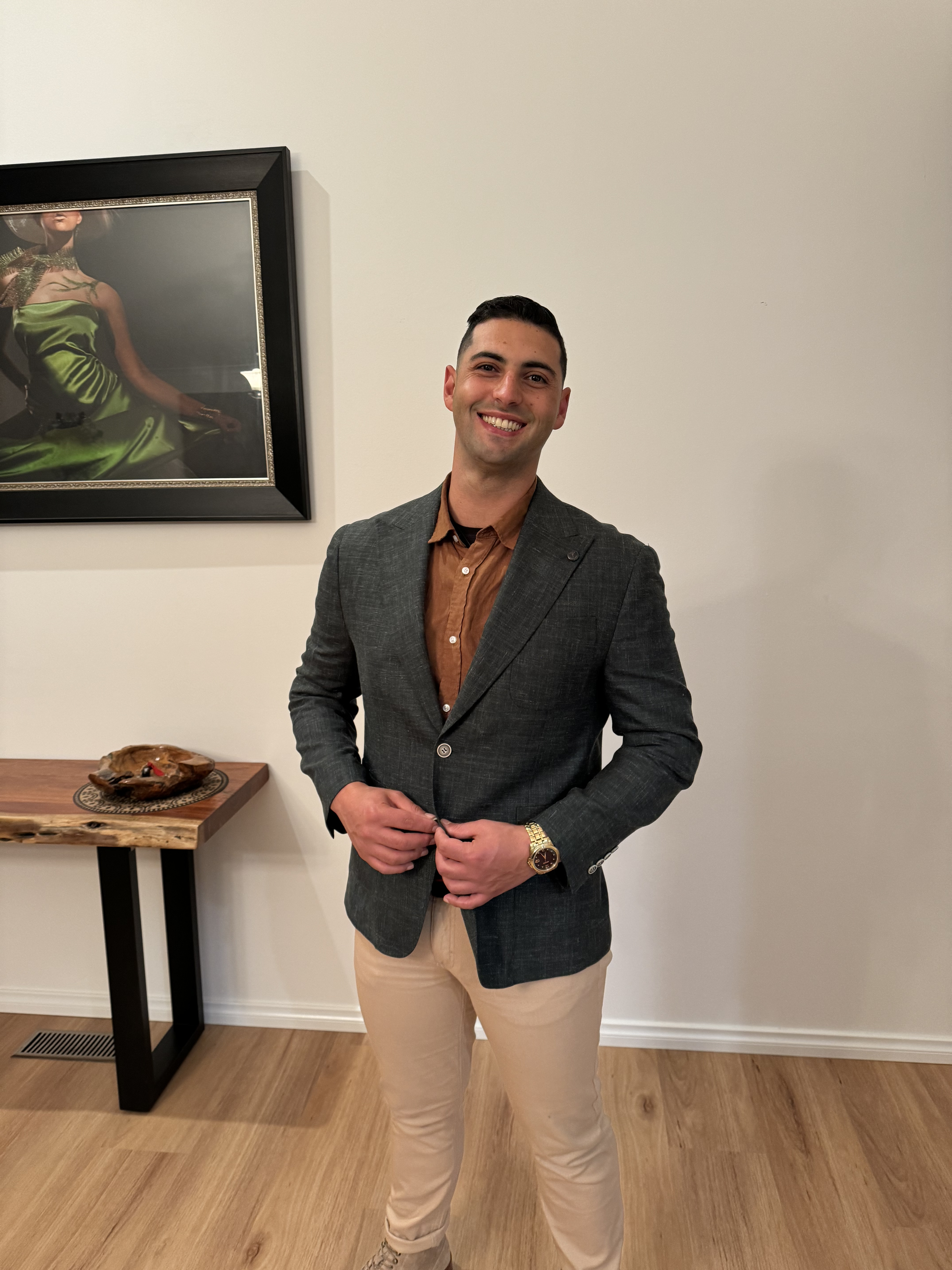
Luke Stringa. CEO, Quantum Key Institute.

CEO and co-founder of Quantum Key Institute. The business side of how QKI runs.

Luke Stringa, CEO and co-founder of Quantum Key Institute
Co-Founder · CEO

Who Luke is.

Luke Stringa is the CEO and co-founder of Quantum Key Institute. He runs the business side of the school — curriculum architecture, operations, the long-term direction — and personally leads the business mentoring that runs alongside every QKI practitioner program.

His path didn't start in coaching. It started in mechanical engineering, moved through IT, then into coaching and hypnotherapy, then into online sales and marketing, then into co-running a client acquisition agency that helped coaches scale to seven figures and beyond. Each chapter added a layer he ended up folding into how QKI is built.

He co-founded QKI with his brother Jacob Stringa. Together they developed the Quantum Key Method over years of working with their own clients before turning it into a formal modality.

The path here.

Luke's career doesn't fit a clean coaching-industry narrative, which is the point. Each chapter added a layer of skill that he eventually folded into how QKI is built.

Chapter one: mechanical engineering.

Luke studied mechanical engineering and business at Swinburne. He left before finishing and took a job in the plastics injection moulding industry. He worked his way up quickly.

That chapter ended with a serious lower back injury. Herniated disc, multiple bulges, surgery on the table. Six months on light duties sealing milk caps in the back of a warehouse. The systems thinking from engineering stuck with him though — how things actually work, how parts fit together, how to trace problems back to root cause. It shows up now in how he architects programs, curricula, and operations at QKI.

Chapter two: IT.

After the warehouse Luke rebuilt himself. He found hypnotherapy, then got an IT job through professional networking with no prior IT experience. Different industry, same systems mindset. Inside six months he was outperforming people who'd been there six years. The IT years also gave him early exposure to the online world that most coaches in his generation never had — which mattered later when he started running businesses on the internet.

Chapter three: coaching and hypnotherapy.

The shift into coaching wasn't gradual. It was a specific decision. Luke trained as a coach and as a hypnotherapist and launched a solo practice. First month did $14K in sales. He quit the day job and never went back. He ran the practice for years, working one-to-one with clients on the kind of patterns that talk-based coaching alone can't shift — the subconscious work, the identity work, the things people came to him for after other approaches hadn't moved the needle.

Chapter four: online sales and marketing.

To grow the coaching business he went deep on online sales, marketing, content, and conversion. He networked into the online business industry and worked as a sales operator inside other coaches' businesses. He became a top performer, closing over $2 million in a short window, training sales teams and building the systems behind them. Other coaches started asking him how he was doing it.

Chapter five: the agency.

Luke co-founded a client acquisition agency with a friend. The agency helped established coaches and practitioners scale their businesses — in many cases to seven figures and beyond. He spent years sitting on the operations side of high-growth coaching businesses, learning what actually moved them and what didn't. That experience is what sits underneath the Business Incubator at QKI now. It's not theoretical. It's the playbook he ran with paying clients for years before the institute existed.

Chapter six: Quantum Key Institute.

The institute came out of years of conversations with his brother Jacob. Both of them had been doing parallel work with clients — Luke through coaching and hypnotherapy, Jacob through breathwork, energy work and the deeper practitioner space. The Quantum Key Method emerged over years of both of them refining how they worked, comparing notes, and noticing the patterns that kept showing up across modalities.

When they put the two halves together — Luke's business side and Jacob's fulfilment side, both built on the joint development of the QKM — the school made sense. The founders page has more on how they work together.

What Luke leads at QKI.

How Luke teaches.

If you've spent any time in his rooms, you know the style. Direct. Specific. Allergic to fluff. The thing students bring up most often is that he won't let them stay vague — if they say "I want to help people", he'll ask which people, with what, for how much, by when. Not because the answer matters that day, but because the question is the work.

The other thing that comes up: he gets boring on purpose about the basics. Volume. Reps. Boring fundamentals done daily. He's said often that nobody in this industry fails from not knowing what to do. They fail from not doing the thing they already know.

The things he says often enough that students quote them back.

Volume always beats talent. The practitioners who win aren't the ones who do it perfectly — they're the ones who do it often.Luke Stringa
Start before you're ready. Readiness comes from movement. You don't think your way into it. You don't have to be great to start, but you do have to start, to become great.Luke Stringa
Identity comes before strategy. You can't build a business as someone you haven't become yet.Luke Stringa
Nobody in this industry fails from not knowing what to do. They fail from not doing the thing they already know.Luke Stringa
Believing is seeing.Luke Stringa
You have to be it to see it.Luke Stringa

Outside the institute.

Australian, based in Sydney. Most of Luke's hours go into the business itself — building it, refining it, working on what's next. Outside of that he trains, swims in the ocean as often as he can, and is an unapologetic enthusiast for a good tiramisu. He's currently deep into AI research and integration — both at QKI and as a service to QKI clients building their own practices. The brothers are close and work together full time.

Connect with Luke.

The clearest way to get inside Luke's work is through the institute itself. The programs page covers the training. The Blueprint is the free version of how he thinks about practitioner businesses. Or read his brother's page: Jacob Stringa.

You can also connect with Luke directly on LinkedIn, or follow Quantum Key Institute on Instagram and Facebook.

Get the Blueprint.

Free. The map for how QKI students become full-stack practitioners and build a practice that holds up.

Download the Blueprint